Six Essential Driving Tools for the Enthusiast Driver
Updated: 23 Apr 14, By Veil Guy
During last week’s 2000 plus mile multi-state road-trip, which encompassed the states of PA, WV, OH, KY, MD, VA, DC, DE, and NJ while I was performing a detailed examination of the performance of the newly released Beltronics STiR+, I thought of the tools that I had assembled in my vehicle to aid me to get where I was going safely and surely and…ticket free. I consider these must-have tools.
Essential Driver Tool #1:An internet-connected smartphone (my personal favourite the Apple iPhone 3Gs).
With the plethora of iPhone apps that are available for free coupled with its ability to be connected to the Internet with its data-plan, it is an essential tool which serves as the foundation for the majority of the other tools that I recommend driving with.
Essential Driver Tool #2:Rhapsody music service app.
Driving for me is one of those special pleasures for “quiet” time (assuming wife is not in vehicle). Time to reflect on things in your life, time to get perspective, time to decompress, and time to relax to music. For merely $10 a month, Rhapsody allows for on-demand and commercial-free access to millions of tunes, directly streamed or downloadable for off-network play that coupled with the iPhone, allows for direct connection into your car stereo (for those newer systems capable of such an interface). My particular 99 BMW does not specifically have an AUX input port, however, using a cassette interface works well enough. Building play lists is easy and painless and can be done with a PC from home as well. No more needing to download/pay for MP3s or having the need to carry CDs.
For me this only means one detector. The Beltronics STiR+. Yes, it is “pricey,” but considering the financial penalties associated with moving violations, the STiR+ easily pays for itself in short order. The level of performance achieved with this detector has never been seen before in 30+ years of my driving with radar detectors. This is a must have tool, folks. Other candidates for consideration in this category are: Valentine 1, Escort Redline, Escort Passport 9500ci and on the little more affordable side: Passport 9500ix and Beltronics GX65.
Essential Driver Tool #4: MapQuest 4 Mobile app.
I used to use a Garmin GPS navigation device or the one built into one of my BMWs, but after using this handy little free app, in my opinion all other [dedicated] navigation devices are legacy. This app provides best-in-class turn-by-turn voice-assisted directions, doesn’t require large database downloads or DVDs, and always provides the most up-to-date data and easily runs in the background of other multi-tasked iPhone apps.
I discovered this little gem of an app several months ago and wrote about it extensively. I continue to appreciate its utility as an essential tool for enhancing situational awareness. Optionally packaged for now to work with the V1 (with a hardware module), this free-application should supplement every radar detector regardless of make as it doesn’t require connection to one to be extremely useful. It is very easy to report a located speed trap, a traffic-stop, or a known-hideout without the use of a radar detector. In fact, on long trips, just knowing where speed traps tend to be on unfamiliar highways could be sufficient for some who don’t wish to drive with a detector. It is that useful.
I found RadarActive on this last trip, especially, to provide the preferred hideout spots along unfamiliar highways. In one instance, RadarActive alerted to an identified speedtrap ahead and an officer was sitting in the precise spot running IO radar (which my detectors did not alert to) as the road was very lightly traveled at the time…the time when a detector owner is most vulnerable to an IO shot.
I am expecting to see some integration of this application into Escort’s products in the future, as I understand they expressed an interest in RadarActive after my initial review was published. I only hope that RadarActive will continue to be an open application. If Escort does indeed offer some integration, perhaps incorporating their Trinity/Defender alerts into the application could sufficiently differentiate their version from the standard-for-free application.
One capability that I would like to see added is the ability to have the application run in the background. Even on a multi-tasking OS like IOS 4.x, when the application is not in the foreground, it appears to stop functioning. Meaning Rhapsody and MapQuest have to be the apps relegated to the background, for all of them to work together properly.
The great thing about a crowd-sourced application like RadarActive, the more people who use it regularly, the more useful, accurate, and timely the alerts become. As I wrote before, every driver should be driving with a RadarActive-like application.
Essential Driver Tool #6:GasBuddy app.
Interesting enough, the last time I did a long-distance review (with two earlier M3 remotes), gas prices were above $4/gal. Beyond being able to locate the cheapest gas in any given area, I find this app great for locating gas stations off of the highway in areas I am not familiar with. On more than one occasion on this last trip, I started sucking fumes and no petrol station was to be found. By using GasBuddy, I was able to determine precisely where remote gas stations were, how far they were away, and what the expected price was. This is another crowd-sourced application that should be on everyone’s smartphone.
Whistler Pro-3600 Review: Whistler’s New Over-Achiever
Updated: 23 Apr 14, By Veil Guy
Introduction
This past weekend was very special.
It was special because three things happened—two astronomically and one terrestrially. During its course we experienced the vernal equinox (start of Spring) and a rare lunar orbital perigee, but perhaps even more special was that I finally managed to have a productive opportunity to experience Whistler’s new remote, the Whistler Pro-3600, in the real-world, after an additional 1100+ mile five state extended road-trip.
I attempted this several weeks ago, but after driving through three states (PA, NJ, NY), and 300 miles, I did not accumulate enough encounters to allow me to learn the personality/performance profile of this new Whistler. All that has changed and I now believe I have a very good feel for the new Whistler Pro-3600 remote installed radar detector.
This is not Whistler’s first remote, as they have offered them for some time, it is however Whistler’s first remote based on their currently highest-performing “78 (SE)” platform that has appeared in Whistler’s dash-mounts including the Whistler Pro-78SE, Pro-695SE, and Pro-690SE.
This product marks an important milestone for Whistler, because if someone is going to go through the trouble and expense of purchasing and installing a remote radar detector, then it is only natural to do so with a manufacturer’s highest performing design within their budget.
The Whistler Pro-3600 is a significant offering, because it is their first detector that provides advanced GPS & photo-enforcement capabilities in one integrated package while providing a ton of features that serve the driver more than the manufacturer’s own marketing/sales literature.
The core unit is sold without GPS, for those that are on a more limited budget, with a street price of under $350. The RLC-360 module can be purchased at anytime for an additional C note, that adds all of the advanced GPS capabilities.
So, what does $350 really get you?
Deep Dive
In my experiences, the performance of the Pro-3600 is what I expected: excellent performance on Ka-band, fair performance on K, and somewhat lacking on X-band, although I suspect X and K-band reception performance will be sufficient for most of us.
Whistler Pro-3600 vs CO 24.1Ghz K Source
Whistler Pro-3600 vs 2 CO 34.7 Ka Sources Facing Away
The Whistler’s effective response on Ka-band, like all SE models, is quite remarkable, often lagging my benchmark dashmount units (Escort Redline, Beltronics STi Driver) by relatively small margins and on other occasions by wider margins, but all appeared sufficient to provide enough advanced warning.
Whistler Pro-3600 vs 2 IO 35.5 Ka Threats
Granted, where I primarily drive in the North East (PA, NJ, NY, DE, MY), the terrain is such that one doesn’t always benefit, as much as one would expect, from having a detector with much greater sensitivity. This subtle reality is often lost on many of those preoccupied with performance only in terms of absolute sensitivity observed on long unobstructed straightaways. Depending upon your specific driving routes, your results may differ if the terrain allows for it.
When approaching radar from around multiple curves and/or with heavier amounts of traffic, one typically does not cross into radar beam-dispersion patterns until well within the detection range, resulting in alerts that begin with a signal strength that is higher than level one (1). In many of my instances, radar detectors have immediately jumped from not alerting at all to alerting with an initial signal strength of 4 or 5.
And, as is often the case, brief reflections of radar (as it bounces around and reflects off a objects and moving vehicles ahead) will create short-lasting windows of opportunity for spotting radar.
In such circumstances, a quicker reacting detector can and will tend to out-alert one that requires longer durations of radar before alerting. This will create the appearance of a detector having greater sensitivity than the detector that chooses not to alert, even one with [much] higher-levels of sensitivity.
There is a critically delicate balancing act happening here, as this alerting behavior is a double-edged sword. Being too quick can lead to excessive false alerts, being too slow can lead to missing an opportunity at an advanced warning when another car is being targeted ahead of you. (The primary purpose of a radar detector’s function).
Fortunately, Whistler’s “reactivity” is user configurable—an especially useful and unique feature to Whistler. (more on this later)
During my travels, I only experienced one laser hit and that was from behind (on highway I-78 in northern NJ) and the 3600 did not alert to it, as it was mounted solely in the front of the vehicle, as all remotes are, with the exception of the Escort Passport 9500ci, which includes an integrated laser shifter ZR4 that includes a rear-facing laser transponder.
This “deficit” can be mitigated, since the Pro3600 can accept an optional rear-facing radar antenna/laser sensor—the only other remotes to have done this, are the less-than-stellar K40s. The über high-end Beltronics STi-R+ can also optionally take a rear laser transponder.
SpeedInfo’s pulsed K-band traffic sensors can wreak havoc with the 3600, very much like many other brands in the market. Escort and Beltronics have since introduced a feature known as TSR to quiet their detectors to these pulsed K-band traffic flow sensors and when invoked makes driving with them much more enjoyable, to say the least.
Pro3600 Filter-mode Reactivity vs. Short-Pulses of K-band Since the reactivity/responsiveness on the Pro3600 remote can be tweaked, the driver can choose the responsiveness that is best suited for him/her (as is the case with its Whistler dashmount counterparts).
I have determined the combination of POP OFF and FILTER 2, does indeed filter out the vast majority of false alerts to these problematic sensors. The selection of FILTER 3, serves to completely eliminate them and with a minimal amount of responsiveness “penalty”—leaving you at less risk at missing bonafide radar shots ahead of you.
With respect to the Pro-3600’s GPS and photo-enforcement capabilities, I must first admit that during my drive in Virgina, Washington D.C., and Maryland, the Pro3600 failed to alert to any RLC monitored intersection! I began having some serious reservations about this feature.
What I failed to realize is that the RLC-360 photo-enforcement database is not loaded by default when the GPS module is added to the 3600—my bad! After a quick call to Whistler, I managed to successfully load the database on to the system.
This is a two-step process initially, followed then by one recurring procedure each month to update the database.
The Pro3600 has a wonderfully unique capability in this regard.
Instead of requiring the remote to be tethered to an Internet-connected PC, the Pro3600 updates its firmware and database requiring only a USB key-drive (no PC required!)
This is the easiest and most elegant solution I have yet seen.
The process is simple but a bit lengthy as it currently requires a person on the other end to send you the files. I am told that this may become automated upon the next website update. You must register the RLC-360 online at Whistler’s web-site and wait for them to send you the files during business hours—an updated firmware and the current photo-enforcement database file.
Pro3600 USB Interface Dongle
First, copy the firmware file to the USB key-drive and make sure it is the only file placed on the drive. Second, connect the key drive to the USB dongle of the Pro3600 while the power is OFF. Then, power the unit on.
During the power on sequence, the Pro3600 will identify the file on the drive, and prompt for accepting the update to the system. Once approved, the system will automatically apply the file update. This process is repeated for the database file update. Once the firmware has been applied, subsequent updates to the database can be applied without the need for another firmware update.
Being armed with this new capability, I set off to Delaware where I knew photo-enforcement was being utilized. What I found is that Whistler’s Verilight database appeared to do a good job at alerting to the presence of redlight cameras located in the two cities I drove in Delaware, Newark and Wilmington.
Whistler RLC-3600 vs RLC of Newark & Wilmington, DE
While it is very difficult to provide a thoroughly accurate assessment of the overall quality of a photo-enforcement database without driving on a regular basis around the entire country to check every location, the 3600 appeared to turn in a respectable performance and did appear to offer a somewhat higher level of accuracy (where I drove) as compared to Cobra’s Aura database, found in Cobra’s top-of-line models and iRadar smartphone application.
So I’ll instead focus on the operating nature, I observed, of their system. The Pro3600 appears to be using a “hybrid” (for lack of a better term) vector and proximity based alerting mechanism. This appears to provide for a more stable distance countdown to photo-enforcement areas (especially around curved roads) and reduced false-alerting. But, it does not appear to be in the same league as the industry-leading Cheetah Trinity database (that has been essentially re-branded as the Defender database by Beltronics and Escort).
However, just being alerted to the fact that a general area is utilizing photo enforcement (at least in the form of redlight cameras), I believe, is sufficient for most drivers (including myself) as I tend to scan intersections whether I am being alerted or not, just to be on the safe side.
Also, just knowing that these scameras are around, I tend to be especially cautious when following other vehicles particularly when lights turn yellow for fear of the tendencies of drivers to nail their brakes often in an overreaction to even shorter-duration yellow-to red-light timing transitions specifically designed to pop that rate of these money making tickets for the for-profit companies that implement them.
Pro3600 Alert and Security LED
Beyond its performance, the Pro3600 incorporates a number of cool features (some completely new), such as user-configurable variable speed filtering (ie; reactivity) modes, configurable over-speed alert, customized user-marked GPS locations, GPS clock, announced direction of travel, GPS compass, outside temperature gauge, additional filter mode (totaling four), two ramp-rates, and an additional heads-up alert LED with a faux-security blinking feature when the vehicle is parked and powered off.
Pro3600 Connection Module
The Pro3600 provides a well-marked connection module with RJ-type connections and an integrated display and control module. The module provides more useful user-customized programming features than any other detector that I have ever encountered (exceeding those of even the V1).
With respect to some of Whistler’s unique and especially useful additional features:
The proximity based alerting nature of the photo-enforcement marked locations can be changed from a larger to a smaller radius (which can be useful for heavily monitored city streets, like those found in Washington, DC.) User marked locations can be deleted as a group within a user-selectable radius, or be removed from memory in their entirety.
Another very useful capability, again unique to Whistler, and will be absolutely essential to international drivers, is user selectable and configurable laser pulse sequence windows that enable the Whistler to be able to additionally see and alert to a plethora of European lasers that have pulse-sequences outside the scope of U.S. made lasers. In fact, Whistler appears capable of detecting the Traffipatrol XR, an incredible feat for a radar detector, regardless of brand or price.
One feature, I very much appreciate is the Whistler’s ability to obtain live time and date using the GPS NMEA protocol and selectable time-zone and DST offsets. I am not aware of another GPS-enabled detector, that offers this. Having that ability could pave the way for Whistler to offer a lot of interesting new capabilities in the future…
Currently, the 3600 does not automatically account for daylight savings time, and I have already made a request to Whistler’s engineering team to consider a firmware update that would enable this capability. This was a timely discovery, as we just crossed into DST. As it stands currently, one must manually enable DST from the menu.
Another aspect of the Pro-3600 I appreciate is the cabling/power fault detection circuitry. When the unit experiences an electrical fault or connection issue of some kind, it alerts with a high-pitched tonal sequence and displays the fault message on the integrated display/control module.
The one-piece display and control module can be mounted in the most-flexible of positions, as the display read-out can be inverted or made to read sideways (for vertical mounting).
The unit has the a GPS odometer and an elapsed travel time log that can be reset, at a push of a button—a handy feature for extended long-distance multi-state trips.
A design element, I don’t particularly care for is the speaker attachment. I find its use, to be a distracting element to an otherwise clean and factory-looking professional install. As it currently stands, the speaker module is designed to attach to the A-pillar and comes with an integrated volume control. I generally regard it as an unsightly component, in my particular vehicle.
Separate Volume Controlled Speaker
Furthermore, the speaker never seems to get as loud as the more conventionally designed dashmounts or the high-end remotes from Beltronics and Escort and depending on placement, the visor can be blocked from opening and closing.
My preference would be for the addition of an external speaker box that can be mounted below the dash and out of sight, that has sufficiently high levels of volume to really overcome ambient in-cabin sounds and whose volume can be changed simply by the press of a button located on the main control/display module. Having an extra audio output to feed into car stereo systems could be a nice touch, as well.
I would also prefer to see some improvements made to the audio signal ramp in two areas. Firstly, the audio alert ramp-up to approaching radar sources appears, by comparison to a dashmount SE, to be a bit lethargic. Secondly, the level of urgency of the 3600’s maximum alert-rate also appears to lag behind the dashmounts.
Other than these little gripes of mine, I believe the Whistler Pro3600 is a thoroughly thought out and refined package, replete with features and capabilities, not found elsewhere, whose subtle utility become more and more apparent (and appreciated) with each passing day.
Conclusion
Some of you have asked me whether or not, I believe, it is worth upgrading to the Pro 3600 from one of their windshield-mount SE detectors. To this question I must offer a nuanced answer.
I say “yes,” if you care to own one remote that provides GPS photo enforcement capability in one package and have a limited budget.
But I wouldn’t suggest doing so, if you are merely looking for increased performance to radar as the detection performance of the Pro-3600 appears generally on par with Whistler’s existing SE dashmount models.
Pro3600 Radar/Laser Receiver Head Grill Mounting
While Whistler’s engineering has informed me that K-band detection has improved a little bit over the dashmount SE models (something that I occasionally noticed), the increase in sensitivity to K was generally offset by the remote’s lower grill mounting location (having given up a height-advantage that the dashmount SEs enjoy).
For everyone else, I believe the Pro-3600 is a viable purchase offering a lot of value for those desiring a budget-priced fully-featured remote.
Happy and Safe Motoring!
Get the Veil Guy’s articles delivered right to your inbox…subscribe at the upper top left of the page.
Please show your support of the online vendor(s), who support my blog:
I still have a first generation police laser gun from Laser Technology (LTI) in my possession, the 20-20 Marksman, introduced in the early to 1990s. It’s sheathed in metal and sports some serious optics. It’s also packs some heft to it.
At the time, it was common to see these lidar guns being operated by the Maryland State Police tripod-mounted, perhaps, in part, because it didn’t take long to experience wrist and general muscle fatigue, when hand-held, because they tended to be a bit top heavy. But, they were built like a tank. In fact, not so long ago, I had a conversation with a NJ State Trooper who was still operating one in the field because, according to the office, the later generation models, like the LTI Ultralyte, were not holding up in the field as well as these original designs.
As lidar guns have evolved over the years (now being 3rd/4th generation) from the long-established manufacturers—LTI, Kustom Signals, Stalker, and Laser Atlanta, they have tended to get smaller, lighter, and considerably less expensive than their predecessors.
Laser Ally Spec View
Laser Ally™: The New Kid on the Block
As with any reduction in manufacturing costs, the trend, all too often, is that quality, reliability, and perhaps even performance suffers as a consequence. A good example of this, is Kustom Signal’s Pro-Lite series of binocular-style lasers. In my experience, the earlier and more expensively built Pro-III is its superior.
Perhaps bucking this trend is DragonEye Technology and their fresh new laser gun called the Laser Ally, which was on display to the traffic enforcement community at the most recent IACP conference, in Florida, and distributed exclusively by Digital Ally.
While Kansas-based Digital Ally is certainly the new kid on the block when it comes to lidar enforcement, it wouldn’t be entirely accurate to think of the the Laser Ally as an “immature” or unproven product.
The Laser Ally is the brainchild of Scott Patterson of DragonEye Technology, LLC. Mr. Patterson has more than a decade of development experience with police lasers, having worked for Kustom Signals along with some other lidar manufacturers.
Over the years, Scott listened to the feedback from the field, collected a list of gripes or suggestions for improvement from the actual users of the different lidar guns, and used this information to develop the new generation Laser Ally police laser designed specifically for the officers and not just some generic RFP.
The appearance of the Laser Ally looks somewhat unorthodox; most notable is the handle, which pitches forward, as opposed to toward the rear or perpendicular to the chassis of other more conventionally designed lasers. This is claimed to improve balance, making it easier to target while being less fatiguing over extended periods of use. We are told by the manufacturer that this will be welcomed, especially by female officers and motorcycle patrols.
From a quality of construction stand-point, Digital Ally has asserted that while compact, the Laser Ally is structurally quite rugged, sporting an internal “floating” internal mechanism that improves accuracy and if dropped or subjected to heavy blows, the die cast, cushioned impact resistant, superimposing elements and HUD projecting display will retain its reticule aiming accuracy without requiring adjustment.
The targeting HUD features a reticule whose shape is wider than it is taller, which assists in easier and more precise targeting at a distance and provides a superior through-the-glass viewfinder experience.
With respect to it targeting abilities, the Laser Ally is capable of successfully measuring speeds through windshields (even those that are tinted) at distances greater than 500 meters (1625 feet) and, as expected, should provide superior inclement weather operation, as well.
Unique to the Laser Ally, is an obstruction mode, which allows for the elimination of stationery fixed sources of reflections, enabling accurate speed/distance measurements from cover and through obstructions that would prevent other lidar guns from obtaining speed readings.
The LaserAlly is designed to accept conventionally-sized C batteries which can also be rechargeable. This promises to be a more cost-effective alternative to proprietary battery/handle inserts of other lasers, such as the Kustom Pro III and Laser Atlanta Speed Lasers.
A very functional sleep mode only requires a single trigger-pull to “awaken” the targeting functions which will also engage the display of the last speed and distance clocking results.
The lidar unit, itself, is lighter than even the diminutive LTI Truspeed while promising to be as quick as the Truspeed in acquisition times, which I regard as one of the quickest in obtaining speed readings.
According to the Digital Ally, the unit incorporates advanced laser-jamming “proof” algorithms, which make it virtually undetectable and potentially unjammable, and is field-updateable via a USB connected PC, meaning no more having to take equipment out of service to load new firmware, threatening the efficacy of all laser jammers today and in the future.
Unlike Laser Atlanta’s optional (and for an additional fee) stealth-mode (which has been largely figured out by most radar detector/laser jammer companies), the LaserAlly’s anti-jamming function does not require a deep menu selection to enable the feature as it is a standard feature which operates by default. With the Laser Atlanta lasers, most officers were not even aware of their stealth-mode abilities or fully understood how to enable/disable their function.
Since the LaserAlly provides this capability seamlessly, it should prove to be somewhat of a headache to manufacturers and owners of laser jammers (although as a percentage of the total driving population, they are a rather minuscule amount).
As of August 2010, Digital Ally’s new lidar gun was certified for speed measurement and now appears on its approved list of lidar guns for traffic/speed enforcement.
We understand that, Digital Ally has yet to be awarded a state-wide contract, but a small number of them can be found in operation in several cities throughout North America, including Boston, Massachusetts.
The lidar unit is competitively priced, retailing at $2995USD.
Although a new comer to the laser speed enforcement market, Digital Ally appears to be offering a mature and thoughtfully designed speed measurement device that has some pedigree to it.
We are expecting to receive a unit on loan from the manufacturer and will publish an accompanying video demonstrating its use and feature set.
Conclusion
Time will tell if Digital Ally can sufficiently penetrate the mature laser speed enforcement marketplace. However, judging by its extensive oft user-requested feature set, ease of use, and elegant design, the prospects may be good.
Weeks ago, Beltronics was kind enough to send me the very first production model of the Beltronics STiR Plus for an early evaluation and review, prior to its introduction to the US marketplace.
Needless to say, I was absolutely thrilled when they did so, since I have been the biggest fan of their (now discontinued) Beltronics STi-R and, I would assert, am more familiar with the operating nature of the original Beltronics STi-R than anyone else.
Those of you that have subscribed to my blog for any period of time, already know how I have felt about the Beltronics STi-R remote radar/laser detector, a detector I have relied upon up to this time and I consider it my most preferred radar detector.
Early Impressions
It is my assertion that the Beltronics STiR Plus is the very best radar detector ever produced in the entire 30+ year history of the radar detection industry.
I would know, as I have driven with more detectors than one could possibly imagine, dating all the way back to the very first high-end (superheterodyne) detector produced, the original Escort, introduced in 1978.
This is an accolade I don’t throw around lightly, using cute semantics or similar wording to describe more than one detector, like other reviewers, who also retail multiple detectors. To me, the very best, means just that, the very best—it is a singular attribution.
Generally, I am more reserved and nuanced in my praise of any given detector. However, my extreme enthusiasm for this new remote, is warranted.
The Beltronics STi-R Plus is based on the most advanced design ever—referred to internally by the company as the M3 platform. Not only do I regard it as the most sensitive detector design ever, it is also undetectable by RDDs such as the Spectre…rendering them obsolete.
The M3 has been incorporated into three other detectors manufactured by Beltronics and Escort (which are sister companies): the first dash-mount M3 radar detector, the Beltronics STi Driver, the Escort Passport 9500ci remote radar/laser detector/jammer, and their latest high-end dash-mount from Escort, the Redline.
While all of these detectors share the M3 design, the Beltronics STiR Plus (like its predecessor, the STi-R) has the unique ability of allowing certain operations to be turned OFF. As with any über-performing design, it is often the case that less is more.
To use a car analogy, as good as the Porsche 911 Turbo has been (equate this to the Passport 9500ci), the Beltronics STi-R Plus is the Porsche GT3 RS of radar detectors.
Like any “stripped” down ultra high-performance car, performance often goes from merely spectacular to the sublime. And the Beltronics STi-R Plus is no exception. The difference, though, with the STi-R Plus, its owner has the ability to operate it in either configuration. Something that you can’t do with either of these two different cars. In other words, you can have your cake and eat it too.
Unfortunately for Beltronics (and their fans, like myself), Escort has been the brand that is generally the more widely promoted and as such, differing performance characteristics between both brands may be lost in the process. Don’t misunderstand me. The Escort Passport 9500ci is a fabulous model in its own right. But from my driver’s seat, I believe the Beltronics STi-R Plus has the ability of being even better.
I base my opinion upon having driven with both models in my vehicle for a good number of years. And, it was I, who first observed and commented about the perceivable enhanced performance levels of the Beltronics STi-R (relative to the Passport 9500ci) as a consequence of employing these advanced configuration tweaks—narrow-band Ka segmentation and RDR (detection processing/qualification) disabling.
In original STiR’s marketing literature the potential beneficial impact that these configuration tweaks could have with real-world encounters were never articulated (promoting them primarily as a means to reducing excessive Ka falsing).
Today, Beltronics does now specifically acknowledge and promote the benefits of an extremely quick-to-react and sensitive detector [to brief radar reflections or quick-triggered (QT) radar] that can still operate without excessive falsing as a consequence; and in addition, if the stationery false radar-lockout function works without flaw, this could be the holy grail of radar detection.
To be clear, I don’t believe that this new remote is actually more sensitive, per se, than any other M3-based detector including the Passport 9500ci or the Redline. I do believe it is merely quicker in alerting to brief radar signals, that theses other models also detect, but are programmed to require a longer duration and/or more qualification before actually alerting to them.
This can give the appearance to the driver that the detector is more sensitive, but technically I don’t believe this is the case and depending upon the nature of the initial encounter this behavioral difference will not always manifest itself. But, when it does, it is a beautiful thing to behold!
This is one of the reasons why my unique real-world testing and reviewing format provides insight into perceived performance variations that are not observable at staged/controlled test-runs in some remote desert. Such nuances are only observable in the real-world of driving over extended-periods of time.
Despite my very vocal proclamations of the value of these enhanced radar detection features, the sales of the STi-R in the US market were apparently not sufficient enough to prevent Beltronics from discontinuing the model. Those who did listen to my original review of the STiR and purchased one, appreciated it for the additional configuration capabilities it possessed, and some of those who didn’t, later regretted missing out when it became no longer available for purchase.
Fast forward about a good number of months (not just three days), Escort and Beltronics have finally seen the light and have resurrected the STi-R in an even more capable form as the Beltronics STiR Plus.
The Plus means that Beltronics has incorporated all of the wonderful features of the Passport 9500ci (advanced GPS functionality: auto-learning/false lock-out, red-light and speed-camera geo-alerting and computer connectivity to allow updates to its firmware and geo-coded database) while preserving the distinctive user-selectable filtering features of the original STi-R. This results in an absolute killer combination and is something I had hoped for from the beginning when both remotes were originally introduced to the US marketplace.
Even with its user-configurable responsiveness, I never found the original STiR at all punishing (like the sensitive and quick-to-react V1 can often be). But for those that may, the Plus promises to be even less so, given its new ability to permanently lockout stationery false locations, like X and K-band door openers and radar drones, automatically, something the 9500ci has had the ability to do since its introduction.
What’s more, Beltronics is offering the STi-R+ without the ZR4 laser shifters (bundled with the Passport 9500ci) at a lower price point than the ci—$1199 versus $1599 for the 9500ci, allowing its owner the option of subsequently adding the ZR4 ($449) or enabling its pairing with another laser jammer from another manufacturer of choice, if desired. *Note: Due to the devaluation of the U.S. dollar, as of May 1st, 2011, the price is expected to increase to $1299.
When you consider that the original STiR retailed at $1099, you’ll understand how much of a value the new STiR+ is now. For merely $100 more, you get the same advanced GPS capabilities of the 9500ci.
One of the developments of both Escort and Beltronics products is that over time the distinction between their models have blurred somewhat. While there are, indeed, performance differences in the varying models based upon the more widely sold conventional M4 platform detectors from both companies, the configuration of filtering changes like those of the RX-65 or the two STiR-based remotes can not be found on other Beltronics models (such as RX-65’s successor, the GX-65) and so the personality differences resulting from these different filtering mechanisms are not as pronounced as they used to be. (This same kind of thing has happened to BMW, where the current 3, 5, 6, and 7 series are not as distinctive as they have been in the past).
Therefore. I am thrilled to see that Beltronics has imbued the STi-R Plus with its unique filtering tweaking ability. Personally, I would not like to see these features appear with other Escort detectors, including the 9500ci— it’s what makes the Plus such a special detector, in my opinion, and so distinctively Beltronics. That’s the real appeal to me. To be clear, I am in no way taking anything away from the 9500ci. They both are spectacular.
Using another car analogy, think of the STi-R Plus as the Bentley to the 9500ci’s Rolls-Royce. Each superlative examples of automotive design of similar origin, but each providing a unique ownership experience.
In addition to having the combined features of the original STi-R and 9500ci, Beltronics has added another goody: quick radar deactivation, further distinguishing itself from the 9500ci. This novel feature allows its user to completely disable radar detection—restricting its function to merely red-light and speed-camera alerting.
This could be invaluable in traffic-stop situations in areas where detectors are expressly forbidden. This feature was imported from down under, where the STiR Plus has been available for some time.
As it stands now, the detection ability has to be re-enabled via software tools, which is not optimal, in my opinion, as driving on an extended trip would cause the driver to remain blind to radar until access to the computer software would be possible to re-enable radar detection.
I have suggested to management that the radar detection functionality be re-enabled by repeating the button-pressing sequence that disables it, a firmware revision for which they appeared receptive.
Another feature that I would welcome on STiR+ is the ability to tailor the alert-decay rate (for lack of a better term).
Compared to other detectors, the trailing duration of alerts (after the radar transmission has ceased) of the remotes approaches nine seconds. While I can understand the reasoning behind such a design element, I personally would prefer the ability to shorten this duration to something on the order of only two to three seconds (more along the lines of Valentine and Whistler models).
The reason for this is that I believe it would enhance the ability of the detector to communicate more precisely an approaching instant-on radar trap. As it stands now, when trailing alerts last for such long duration, I believe alert textures can often be lost in translation. By giving the driver the choice of alert-decay rates, I believe, it would further improve its utility.
At some point, I hope Beltronics considers packaging this entire feature-set into a dash-mount version—call it the STi Driver Plus. At what would have to be a higher price point (than even their halo dash-mount detector, the Escort Redline), like this new remote, it would still be the value of the century. I asked for this quite some time ago, perhaps we’re closer to this reality, now. I still believe, if you build it, people will come…
Conclusion:
Any one considering the installation of a high-end radar detector in their vehicle would be well advised to consider the only viable alternative to the 9500ci. If you find it’s back-ordered, don’t fret. It’ll be worth the wait.
It is the greatest radar detector of all-time, bar none.
Happy and safe motoring!
PS: I will be following up with a more thorough real-world examination as I accumulate miles and traffic radar encounters with this unit in part ii of this review.
Please show your support of the online vendor(s), who support my blog:
An Increasingly Important Feature: Escort’s Traffic Sensor Rejection (TSR) Filter
Updated: 23 Apr 14, By Veil Guy
I had been planning on doing an article on Escort’s new Traffic Sensor Rejection (TSR) filtering feature—currently now available on both Escort and Beltronics radar detectors (and available as an update [for a fee] for those models that did not have it initially)— but like anything, sometimes things aren’t always a priority, that is until they become one, by happenstance.
And that’s exactly what happened to me last Sunday when, after a very long day of flying, I arrived in Los Angeles, CA and drove myself, in a rented Caddy to Ventura (about a hour north) for a business trip. For this trip I grabbed one of my V1s (to use for its superb laser sensitivity as a defense to CHP extensive use of lidar).
It was pretty late and I was quite fatigued, but cruising along nicely in the northbound lanes of Highway 101 when my V1 began alerting, at full strength, to repeated blasts of very strong instant-on (IO) K-band radar. My initial reaction, of course, was to nail my brakes, causing my large silver DTS to nose-dive precipitously. Had a vehicle been trailing behind me closely, it would have been in my front seat!
I immediately scanned my rear-view mirror for the culprit (as the alerts came from the rear), looking for the tell-tale signs of the headlights of a cruiser, while at the same time pulling out of the passing lane to the center lane. I couldn’t identify any suspicious looking vehicle, so shortly thereafter, I pulled back out in the left lane to continue my brisk progress northward.
Just as I settled back into the comfort of the driver’s seat, FULL BLAST ALERT!, again on K-band. Once again, my heart was in my throat as I feverishly searched for what clearly was a trooper waiting to pounce on me when I got my speed high-enough for a big fat juicy ticket. Again, I hunkered down in the center lane, like a good little boy, waiting (I mean praying) for the trooper to overtake me and seek out better prey.
Well, he never did and only after I was passed by a couple of small compacts, did I get the nerve to re-assert the Caddy’s V8 in the left lane.
Another FULL BLAST K-band shot! This time from the front!
I was thinking, what the heck is going on here? Did he pass me somehow? Is he driving an unmarked? I am too tired to be dealing with this nonsense…so I resigned myself to cruise at a more leisurely pace. If he’s around, I don’t care, if he hasn’t pulled me over now, I must be pretty safe.
Then again, full-blast of K-band in the front…then in the rear!
At this point, I started to think that something else was going on here. Something with a certain regularity. Something, benign.
Then I thought of the feature that was in the back of my mind, a feature that was now being offered by Escort and Beltronics. A feature called TSR or traffic sensor rejection filtering.
Ahhh, that must be it! This is what it’s all about. This is why Escort introduced this new filtering capability! To filter out this extremely unsettling annoyance!
Sure enough, I started looking at the side of the highway and then I saw it! A silver-like tube mounted on a pole and facing into the direction of traffic just at the time that I received another full-blast K-band alert.
Speedinfo’s Traffic Sensor I/O K-band Radar Unit
These little buggers are used by the DOT to monitor the flow of traffic on major arteries around LA (and a growing number of other cities) to identify traffic conditions in real-time.
My Lord, and I thought K-band FM modulated vehicle lane-departure systems were potentially disruptive. In their current form, these things are far worse for any one driving with a conventional radar detector. I mean, folks, here you have a benign radar-based traffic monitoring system which directly mimics the most lethal form of police radar! OUCH!
These real-time traffic sensors operate a varied intervals 24/7, ranging from an observed 15 seconds to 30 seconds, during the daytime, to upwards of one minute, in the evening, and transmit for a brief duration of about 250ms (1/4 second), according to the manufacturer.
And I couldn’t have selected a worse detector to use than the Valentine One. These traffic sensors wreak extreme havoc with the V1’s high levels of K-band sensitivity and lightning-quick responsiveness. The V1 was essentially unusable in this environment! So, I was forced to turn it off and drive the rest of the way to my hotel as if I didn’t have a radar detector with me!
Later in the week, I had a new Escort Passport 9500ix shipped directly to my hotel (from my friends at BuyRadarDectors.com) so that I could examine, in detail, the capabilities of this useful new feature (now that it’s got my attention!) so that I can share my first-hand experiences with my loyal readers and hopefully spare you the heartache that I initially experienced.
After spending a couple of days using the Passport 9500ix and comparing and contrasting it to the Valentine One when exposed to this sensor technology, I have formed some opinions that I share in the following video, actually demonstrating their respective behaviors.
Interestingly, I believe this video also effectively demonstrates the different reaction-timing philosophies of both companies that quick-trigger (QT) advocates will really appreciate.
Judging by my experiences (as documented in the video), I believe Escort is effectively “filtering out” these alerting sources, by intentionally slowing K-band responsiveness, long-enough that when this additional time-requirement is added to their underlying K-band duration-requirement, that it extends the reactivity of their detectors long-enough so that any brief traffic sensor emission is gone within the combined time-requirement, thus eliminating these spurious alerts completely.
I believe this feature is not all that dissimilar to Whistler’s long-standing user selectable filter modes, each of which, changes the responsiveness of their detectors to brief radar sources, independent of band. In this case, of course, Escort and Beltronics appear to be doing this only with K-band.
One of the upshots of this, I believe, is that their detectors can even be more quiet to relatively brief detections of K-band, which frequently come from door openers of stores adjacent to the highway, when TSR filtering is enabled.
Keep in mind, Escorts, by design, are not the quickest at validating K-band sources to begin with (that in part, contributes to them being less-prone to falsing than, say, a V1 or a segmented STi-R with RDR OFF).
Even without TSR filtering enabled, the duration of the traffic sensors’ K-band transmissions appear close enough to the Escort’s minimum validating time requirements for K-band that their detectors do not consistently alert to them which, in this instance, is not necessarily a bad thing.
If my observations are correct, I would recommend when TSR is not specifically required, that you turn-off the feature, as the total combined “delay” may be long enough to put you at an increased risk to missing a bonafide brief shot of K-band when and where instant-on K-band is being deployed.
In fact, I would much prefer if Escort would allow for a single push of a button to quickly enable or disable the feature (much like city/highway modes). As it stands, one has to enter the programming modes of the detector, drill deep down into the menu system, and change the band-reception configuration. Perhaps an even better approach would be to allow for the automatic engagement/disengagement of the “filter” by GPS coordinates maintained by GPS-enabled radar detectors like the 9500ix (though this may be much harder for them to program in actual practice).
These preferences aside, in my opinion, while driving on roadways deploying traffic sensors such as these, Escort’s and Beltronics’ feature is a most welcomed new capability that can make all the difference in the world between a most-hellish or an extremely pleasurable driving experience with a very sensitive radar detector.
The choice is yours…
Update 18 JAN 11:My understanding is that as more of these systems get deployed, the manufacturer may look at ways to make them less likely to create these kinds of interference issues, a very good thing, because I feel there will be a lot of benefits to this new traffic-flow monitoring and reporting technology, especially one that is not disruptive to radar detector owners. The good news is that Valentine Research may have their own software/firmware update in the works and it’s conceivable that existing Whistlers can be set to filter-2 mode along with POP-OFF to essentially accomplish a similar outcome!
I still have a first generation police laser gun from Laser Technology (LTI) in my possession, the 20-20 Marksman, introduced in the early to 1990s. It’s sheathed in metal and sports some serious optics. It’s also packs some heft to it.
At the time, it was common to see these lidar guns being operated by the Maryland State Police tripod-mounted, perhaps, in part, because it didn’t take long to experience wrist and general muscle fatigue, when hand-held, because they tended to be a bit top heavy. But, they were built like a tank. In fact, not so long ago, I had a conversation with a NJ State Trooper who was still operating one in the field, because the later generation models, like the LTI Ultralyte, were not holding up in the field as well as these original designs.
As lidar guns have evolved over the years (now being 3rd/4th generation) from the long-established manufacturers—LTI, Kustom, Stalker, and Laser Atlanta, they have tended to get smaller, lighter, and considerably less expensive than their predecessors.
A New Kid on the Block
As with any reduction in manufacturing costs, the trend, all too often, is that quality, reliability, and perhaps even performance suffers as a consequence. A good example of this, is Kustom Signal’s Pro-Lite series of binocular-style lasers. In my experience, the earlier and most expensively built Pro-III is its superior.
Perhaps bucking this trend is DragonEye Technology and their fresh new laser gun called the Laser Ally, which was on display to the traffic enforcement community at the most recent IACP conference, in Florida, and distributed exclusively by Digital Ally.
While Kansas-based Digital Ally is certainly the new kid on the block when it comes to lidar enforcement, it wouldn’t be accurate to think of the the Laser Ally as an “immature” or unproven product.
The Laser Ally is the brainchild of Scott Patterson of Dragon . Mr. Patterson has more than a decade of development experience with police lasers, having worked for Kustom Signals along with some other lidar manufacturers.
Over the years, Scott listened to the feedback from the field, collected a list of gripes or suggestions for improvement from the actual users of the different lidar guns, and used this information to develop a newer generation of police laser designed specifically for the officers and not just some generic RFP.
The appearance of the Laser Ally looks somewhat unorthodox; most notable is the handle, which pitches forward, as opposed to toward the rear or perpendicular to the chassis of other more conventionally designed lasers. This is claimed to improve balance, making it easier to target while being less fatiguing over extended periods of use. We are told by the manufacturer that this will be welcomed, especially by female officers or motorcycle patrols.
From a quality of construction stand-point, Digital Ally has asserted that while compact, the Laser Ally is structurally quite rugged, sporting an internal “floating” internal mechanism that improves accuracy and if dropped or subjected to heavy blows, the die cast, cushioned impact resistant, superimposing elements and HUD projecting display will retain its reticule aiming accuracy without requiring adjustment.
The targeting HUD features a reticule whose shape is wider than it is taller, which assists in easier and more precise targeting at a distance and provides a superior through-the-glass viewfinder experience.
With respect to it targeting abilities, the Laser Ally is capable of successfully measuring speeds through windshields (even those that are tinted) at distances greater than 500 meters (1625 feet) and, as expected, should provide superior inclement weather operation, as well.
Unique to Laser Ally, is an obstruction mode, which allows for the elimination of stationery fixed sources of reflections, enabling accurate speed/distance measurements from cover and through obstructions that would prevent other lidar guns from obtaining speed readings.
The Laser Ally is designed to accept conventionally-sized C batteries which can also be rechargeable. This promises to be a more cost-effective alternative to proprietary battery/handle inserts of other lasers, such as the Kustom Pro III and Laser Atlanta Speed Lasers.
A very functional sleep mode only requires a single trigger-pull to “awaken” the targeting functions which will also engage the display of the last speed and distance clocking results.
The lidar unit, itself, is lighter than even the diminutive LTI Truspeed while promising to be as quick as the Truspeed in acquisition times, which I regard as one of the quickest in obtaining speed readings.
According to the manufacturer, the Laser Ally incorporates advanced laser-jamming “proof” algorithms, which make it virtually undetectable and un-jammable, and is field-updateable via a USB connected PC, meaning no more having to take equipment out of service to load new firmware, threatening the efficacy of all laser jammers.
Unlike Laser Atlanta’s optional (and for an additional fee) stealth-mode (which has been largely figured out by most radar detector/laser jammer companies), the Laser Ally does not require a deep menu selection to enable the feature as it is a standard feature which operates by default.
This should prove to be a somewhat of a headache to operators of laser jammers (although as a percentage of total driving population, they are a rather minuscule amount) because most officers were not aware of LA’s stealth-mode ability or fully understood how to enable/disable the function.
As of August 2010, the Laser Ally was certified for speed measurement and now appears on its approved list of lidar guns for traffic/speed enforcement.
We understand that, Digital Ally has yet to be awarded a state-wide contract, but the Laser Ally can be found in limited operation in several cities throughout North America, including Boston, Massachusetts.
The Laser Ally is competitively priced, retailing at $2995USD.
Although a new comer to the laser speed enforcement market, Digital Ally appears to be offering a mature and thoughtfully designed speed measurement device that has some pedigree to it.
We are expecting to receive a unit on loan from the manufacturer and will publish an accompanying video demonstrating its use and feature set.
Conclusion
Time will tell if Digital Ally can sufficiently penetrate the mature laser speed enforcement marketplace. However, judging by its extensive oft user-requested feature set and elegant design, the prospect of success appears promising.
RadarActive and crowdsourcing, The Ultimate Game Changer?
RadarActive v1.7 for iPhone
Updated: 23 Apr 14, By Veil Guy
GPS technology certainly has permanently changed the radar detector landscape. I knew this when I was the first to pronounce that GPS-detector integration was a game changer years ago—not just a trendy gimmick—and we have Escort (really Uniden) to thank for this.
Since I reviewed an early model of the Passport 9500i, the first high-end radar detector to offer incorporated GPS capability, in just a couple short years, Escort further improved the power of GPS/radar detection integration with subsequent products including the Passport 9500ix, Passport 9500ci, and most recently their Passport iQ.
Other manufacturers have also followed in Escort’s trailblazing**, though nothing as yet has compared to the overall performance and sophistication of Escort’s (and Beltronics’) designs.
I remember my first drive with the Passport 9500i and that I fathomed the possibilities of marrying GPS geo-coding to radar/laser detection alerts.
Fast forward a mere two years and along has come the proliferation of an even more significant technology—Internet connected SmartPhones like the class-leading Apple iPhone. Again the wheels turned in my mind as I pondered the potential provided by the future integration of radar/laser detection, GPS, and SmartPhone technologies. I am anxiously waiting for Escort to publicly embrace/announce such an approach using their new Passport iQ (platform) as they may be considering this internally.
Well, now there’s NO need for me to ponder (or wait) any longer. The future has finally arrived and it has all been made possible by a new upstart company named SignalActive and their radically new software/hardware application called RadarActive.
Does RadarActive have the potential of making conventional radar detectors obsolete? Well, before I answer that question, let me describe what RadarActive actually is.
According to the developer (who happens to be an avid reader of my blog!), RadarActive is a speed trap information network where live police speed traps are crowdsourced directly from other drivers (primarily those who use radar detectors).
RadarActive is a software application designed to run on Apple’s iOS and the hardware devices which run it, namely the iPhone and iPad 3G. Using the GPS capabilities of these devices to collaboratively share, in real-time, speed trap encounters with other uses of RadarActive.
The Valentine 1 Gets a New Lease on Life
The program itself is free for download from iTunes and can be used with an optional hardware interface ($89) to one the best radar detectors of all time, the Valentine 1. By interfacing with the V1, the iPhone acts as a remote display replacement for the Valentine while providing real-time GPS mapping and positioning.
As one drives, geo-coded data such as known red light cameras, speed cameras, and police speed traps of varying type (radar, laser, VASCAR) appear on the map and alert you to their presence. These marked locations are provided by other users and public data-sources, in real-time, and are date and time-stamped as to the freshness (or staleness) of the last reported encounter. During the alert, one can vote for the authenticity of the marked location to aid other drivers in qualifying the reported threat.
RadarActive can be used for free as a stand-alone product (no radar detector is needed) or with any radar detector, but when mated to the Valentine 1 specifically, when a speed-trap encounter is reported, the type of alert (such as Ka-band) is automatically associated with the report so when another driver comes upon the location, he or she will not only be alerted to the threat, but will also be informed as to its specific nature—be it X, K, Ka, or lidar—as the V1’s alert detail is recorded along with the reported/marked location!
When in unfamiliar territory, other drivers will be alerted to the preferred hide-outs LEO’s like to use, even if they are not actively operating radar/laser/VASCAR at the time. This is the kind of critical knowledge that only the seasoned local drivers would ordinarily know. By displaying these reported locations real-time on the map, drivers who are unfamiliar with their surroundings will be immediately alerted to patrolled regions of the highway which can help them determine a safe and prudent speed with which to drive for a given duration.
Android users will be pleased to learn that there will be a version of RadarActive for their phones in the near future.
Furthermore, the developers are inviting owners of other radar detector brands to request an interface for their particular model.
As I made a 100 mile loop around the greater Philadelphia area, I was correctly notified of all redlight camera locations (on Roosevelt Blvd/Route 1) and common state trooper ambush locations on I-476 (Blue Route) and Route 422.
Depending on your approach speed, you will receive the audio alert (with the correct band identification alert-tone) at varying distances along with a distance countdown to the actual marked location.
Collaborative knowledge sharing technology is the ultimate game-changer.
In areas where radar detectors are forbidden, drivers armed with their iPhone can now be alerted to radar/laser threats without the direct need for a radar detector. The same is true for commercial truckers who can now benefit from other drivers who are legally permitted to operate them, without having to worry about getting sideways with the law or having the absolute need to own and operate a spectre-immune radar detector like the Escort Redline and Beltronics STi Driver.
A couple of caveats when using ActiveRadar with the hardware interface kit. Since the iPhone acts as the concealed display, the V1 goes totally dark. Also, if using the auxiliary output of the iPhone, when making or receiving phone calls, one must use the speaker-mode or a Bluetooth link to talk as the V1 effectively uses the MIC-input disabling the built-in microphone of the iPhone. That was a problem for my older BMW which doesn’t have bluetooth. Also you can hear a very slight bleed over of the input signal into the audio output section.
Also, while the program integrates nicely with the iPod and Pandora applications, it does not do so well with Rhapsody (my preferred music streaming service). Rhapsody, of course, can run in the background using iOS 4, but improved integration would be welcomed.
A feature I would like to see in a future version of ActiveRadar is the manual ability to mark false locations (along with the complete alert profile—band IDs and bogey count) to inform other drivers of probable false locations. The ability to alert to such reports could be selectively enabled by the driver with the application’s settings menu.
The Best False Alert Handling in the Business
As it stands, RadarActive does automatically log and report certain (false) detection alerts, when and where they happened and it even harvests directional information, bands detected, and bogey counts, provided by the V1’s radar locator to properly place them on the map. It also allows other users to tag the alert as a false positive, moving police encounter, or real alert when they come upon the same area. This feature is really incredible because this prepares you for the false detections before you actually come upon them! So no more having to nail the brakes every time your radar detector alerts! And at this point, I have the volume of my V1 way down so when it does alert it is not at all annoying. In fact, the volume can be completely down, because when you approach a previously reported false, the program slightly mutes the audio output of the phone’s aux line-out so if you happen to be streaming/playing music loudly and you are presented a quick staccato of very pleasant tones while displaying distance countdowns to the alerts’ maximum detected levels.
The ability to auto-mute, in advance, harvested false locations with the Valentine 1 and other detectors will soon be possible. One simple way to do this is for the application itself to directly alert with the detector’s native tones through the iPhone’s aux. output. As stated earlier, the V1 can have its volume turned completely down since the concealed interface is providing the information. Imagine saying goodbye, once and for all, to all of the false alerts from this uber-sensitive radar detector (or any other sensitive detector for that matter).
Such a capability will eclipse Escort’s own TrueLock auto-lockout feature because other drivers could provide the advanced knowledge of the false locations with repeated encounters and share them immediately to everyone else. This should also eliminate the possibility of false lockouts of real traffic radar (as some have complained about with TruLock)—this is a revolutionary feature here, folks.
Furthermore, users—appreciating the lightening-fast reactivity (to briefly reflected longer-duration radar and quick-trigger) and the benefit of directional arrows that only the V1 provides—can finally have their cake and eat it too (an ultra-quick radar detector that doesn’t excessively false as a consequence). Now that would be about the hottest ticket going—a super-empowered GPS-enabled Valentine 1.
Additionally, having the ability to manually specify other types of speed traps, like stationery VASCAR (or ENRADD) setups, could also be especially helpful. These time-distance measurement techniques are commonly used throughout PA by the locals as only state troopers are permitted to operate traffic radar.
While the provided documentation is scant, the application itself has a FAQ section and their website radaractive.com provides more information.
The beauty of RadarActive is that as the most sophisticated drivers use the program, the better and more useful the knowledge-database becomes. Since the GPS function of the iPhone does not directly require an active data or cellular connection, any data collected during a network outage will automatically be relayed back to RadarActive’s database servers upon subsequent re-connection.
So, going back to my initial question. Are conventional radar detectors now obsolete?
In a word, NO, they are not, at least not yet…
…BUT, the writing is most certainly on the wall—knowing the swiftness of new technology—conventional non-connected radar/laser detectors are likely going the way of the dodo—unless, of course, they’re paired with smartphone and/or crowdsourced technologies like that of RadarActive.
Furthermore, other drivers who don’t currently or ever don’t desire to own one, may have less of an incentive to do so with such an application, in a stand-alone setup, as they too can stand to benefit from others who choose/continue to use ’em.
These drivers don’t have to be perceived as “leechers,” though, as they can still report speed trap locations simply upon visual identification of either an active speed trap or an existing traffic stop.
Those drivers who appreciate the greatness of the Valentine 1, now have a 21st century GPS capability that Valentine, itself, has not offered.
Valentine’s philosophy has always been that they will continuously tweak the V1 (whenever dictated by circumstances and not by sales and marketing goals) while providing the most advanced hardware interface of any detector—leaving it to others, skilled in the art, to take things to the another level.
The vast majority of people still fail to understand this and instead accuse Valentine Research as not being innovative. These naysayers (ie; retailers of other manufacturers) couldn’t be more wrong.
Valentine has given all of the advanced interfacing tools , leaving it to others to enhance the V1’s capability, this is something no other detector company has had the foresight to do. The sheer combined capability of RadarActive+V1 is evidence of this fact. Keep the faith in VR.
These guys are pushing the outside of the envelope.
In just a short number of months, SignalActive has already updated/improved their application eight times and this upstart appears very receptive to suggestions for product improvements—which generally isn’t the case with the more established companies. We expect the pace of improvement of both their system to continue to be fast and furious. In fact, SignalActive has indicated to me that their system is constantly being improved, so just hold on to your smartphones, there is even more exciting stuff coming.
Truth be told, ever since Escort developed the Passport 9500ix/9500ci, my Valentines have been since relegated to the closet. But, thanks to RadarActive, my four Valentines now have a new lease on life on my dash. So don’t count the Valentine 1 out, just yet as GPS-empowerment serves to keep the Valentine 1 relevant, to be sure.
I once tried Trapster, but quickly determined the ubiquitous alerts (“police often hide here”), became painfully annoying and essentially useless. Since RadarActive automatically and quickly ages-out older reports and uses bonafide radar detector alerts to validate most of the reports, the quality of the overall experience should be far superior to others. Furthermore, Valentine 1 owners tend to be much more sophisticated and technically inclined as a group of enthusiast drivers, so the quality of the data coming from such owner/operators has the real potential to be quite good.
Bottom line: every enthusiast driver who owns a smart phone should be driving with RadarActive, starting NOW!
The sooner more enthusiast drivers use this invaluable tool, the quicker the system will improve. I am a huge fan of open-source-type—as opposed to proprietary (often for a fee)—shared information that the Internet community generally encourages. Help make this collaborative effort go viral, by spreading the word at social networking sites and automotive and cycle forums (linking to this article, can’t hurt, either).
Don’t yet own a smartphone?
Well then it’s high time to trade in your older cell phone and get one—as you can offset, to some extent, the cost of your cell provider’s data-plan with the cost savings of the elimination of a radar detector manufacturer’s proprietary subscription plan with the free open-sourced nature of RadarActive’s shared information network. Considering the costs of tickets these days when you factor in everything, if RadarActive saves you from just one speeding ticket, it essentially pays for the cost the data plan to operate it.
Furthermore, since Valentine 1’s are far less expensive ($250-$350 less) than some of the newest hardware-based GPS detectors currently being offered, the immediate savings you realize from your purchase can also offset your cost of entry, to a good extent, to this 21st century solution.
SPECTRE Immunity (with the Escort Redline/Passport 9500ci/Beltronics STi-Driver/STi-R and STi-R Plus) and RadarActive When I blogged my feelings about Escort’s new Passport iQ, I mentioned the potential of the platform, but opined about the initial release not possessing Spectre III/IV immunity, considering its cost premium. For the price of $650-$750, its unfortunate the it ain’t there (at least for now) and I still hold to that opinion. In fairness to Escort, I’ve been told by them that such a package is not practical on a number of levels.
BUT, we fans of either high-end model (of which I am one) can still have our cake and eat it too, with a hardware interface for both models (which I am told is very doable). As is the case with the V1, the cost of entry to such a configuration would come under the cost of the other (higher) price models and provide the same capabilities.
In fact, if you consider that AT&T Wireless currently offers or has offered new and refurbished iPhone 3G and 3GS (my preferred even over the iPhone 4) for $99 and less (and other Android-based phones), some even for free with appropriate data plans, some of which are pretty inexpensive, your cost of entry could be had just on the mere initial savings with the selection of this currently superior alternative.
I have been informed by the folks at SignalActive that the amount of actual bandwidth used by their application is extremely small as compared to other Internet-related activities. So fears of excessive usage-charges for metered wireless data plans should be allayed.
Other more established players that are already in the hardware integrated GPS/radar detection manufacturing business may eventually attempt to enter this space and may even try to charge their users for the privilege of using the shared knowledge collected with their products (perhaps even striving to keep the data they collect proprietary), but utilizing the open-source nature of a well-designed shared-data networking system consisting of users of a software product that is radar detector manufacturer agnostic (as RadarActive promises to be) would be my personal preference and likely prove to be very very tough to be beat (just think of the success of Wikipedia).
Any detector that doesn’t possess these enhanced crowdsourcing capabilities feels instantly dated.
Remember you’ve read it here first, mark my words: crowdsourcing technology, like that of RadarActive, will change the face of radar detection forever…and become the ultimate game changer…the ultimate detection enhancement.
Talk about situational awareness…how ’bout situational awareness on steroids!
Start driving the safest and the smartest and once you have, you’ll never look-back. Yeah, as if you couldn’t tell, I am really hot for this technology. ;)
**It was actually Uniden, who first attempted (a more limited form of) GPS/radar detection integration, but their products were ultimately not successful in the marketplace.
Cobra iRAD-100 Review (iRadar) : Cobra’s detector for the 21st century smartphone driver.
Updated: 23 Apr 14, By Veil Guy
I have been an iPhone user for a good number of years now (after resisting smartphones for fear of becoming genetically attached to them). As it turned out, I lost that fear and now find the iPhone the first and last thing I touch in the morning and night (much to the chagrin of my wife!) Yes, I have become an iPhone junkie.
Over the years, I have accumulated many iPhone apps, including Rhapsody, Wallet Zero, E-Trade, Zillow, Trapster, AP News Wire, BBC, NYTimes, Zynga Poker, and TVULite.
First Impressions
But one of the more fascinating iPhone/iPod/iPad applications yet to appear and available free for download on iTunes is Cobra’s new iRadar app. This application requires a hardware radar/laser detector, the iRAD-100 which communicates to the iPhone via bluetooth. That’s right, when it comes to radar/laser detection, Cobra now has an “app for that.”
In my opinion, Cobra has come up with an interesting design. With the iRadar application, one can control all major operating characteristics of their first iRadar-enabled radar detector, the iRAD-100. The iRAD-100’s settings are permanently remembered (even without the presence of the iRadar application and bluetooth syncing).
Products documentation is a bit scant, which is unfortunate given the increased complexity of user-interaction and the fact that many Cobra owners have appeared (on the road) to not have a thorough understanding on how to operate their Cobra radar detectors properly.
Cobra iRadar Application Settings
They include the ability to auto-mute, log detections, toggle all radar-bands (finally) including POP detection, city/highway modes, as well as detection of known photo enforcement locations, caution areas, speed traps, customized user-locations and over-speed alerts and the ability to quickly reset all of the iRad-100 settings with one push of a “button.”
The standard dashboard display on the iPhone includes real-time speed indicator in either English or metric, vehicle battery voltage, and direction traveled, as well as a button to mark a location and/or an alert (as real or false, which results in subsequent muting).
One feature of the software that I especially like is the display of all marked locations on a Google-like map which can be panned and zoomed. This capability is worth the price of admission in my opinion given that Aura is a professionally-qualified database (versus amateur markings of applications like Trapster or as downloadable custom points in standard GPS units like Garmin). Although the quality of the Aura database is generally regarded as not being as well-maintained/accurate as the class-leading Trinity/Defender database.
Cobra Aura Database Data Points
I am a bit surprised that this mapping capability is enabled (if only with proximity) without the requirement to have the iRAD-100 to be actively synced to view this valuable information, at least regionally (within a limited radius). Once connected, though, the iRAD-100 utilizes the GPS capabilities of the iPhone to provide its current location and speed in real-time.
What is even more fascinating is that the program is capable of operating without the unit altogether, providing real-time mapping, direction, and speed indications, although the GPS blue ball can stray quite a bit from its actual location. I found myself tonight driving on the adjacent stream where I don’t expect to come across any photo enforcement (at least not yet).
A dedicated GPS unit like a Garmin does a better job in this department with its higher and more stable and dedicated satellite-based GPS resolution. Also, the real-time speed indicator lags, sometimes quite a bit. I suspect this is due more to the GPS functionality of my underlying iPhone 3Gs than to the software itself. Again, dedicated satellite-based GPS units, appear to be superior in this regard, as well.
It is interesting to note that the speed indications work when walking/running or even cycling. Along with its compass the could come in handy when hiking in the wilderness. If you have an iPhone, I encourage to download the program from iTunes and try it out. It’s pretty cool.
Although the application can run in the background of the IOS 4.x multi-tasking capable OS, display alerts will not assert themselves to the foreground when using the phone or any other application in the foreground. Fortunately, the iRAD-100 is capable of providing audio alerts without the need for the iRadar application to be in the foreground or even operating—the iRAD-100 is capable of running stand-alone (think of it as an all-dark mode version of a conventional radar detector).
Unlike some mis-information with some other online-blog postings, the iRAD-100 is not battery operated (which always hurts performance over actively powered units) and has included with it a nice long power cable which includes a built-in USB connection which can simultaneously power the iPhone. This eliminates the need to utilize dual-power connections.
Cobra informed me that the iRAD-100 has been favorably received in the marketplace thus far and the potential for future smartphone support (ala; Android) may be in the cards.
UPDATE 11-17-10: Cobra has announced their intention to offer a version of iRadar for Android-based smartphones early next year!Perhaps they read this article? :)
When I reviewed Cobra’s first GPS-enabled radar detector, years ago, my early-production model had the ability to mark locations as falses very much like the Escort Passport 9500i (which predated the Cobra). Apparently it was too much like it as Escort asserted that Cobra’s copy of Escort’s feature violated their patent. As a result, Cobra removed the feature in its firmware and no “integrated” Cobra GPS-enabled radar detector has had this capability to this day.
With the iRAD-100 and iRadar design sufficiently different from their hardware-only models, Cobra has once again offered this capability.
The current version of the iRadar application is v1.60. I would love the ability of the program to potentially be able to communicate back to the folks managing the Aura database with user location markings (over the Internet via AT&T’s Edge or 3G data network). This collaborate process would really bring radar detection into the 21st century making every other stand-alone conventional or GPS-enabled radar detector seem dated by comparison.
The ability to mark and then alert in real-time to speed-traps by other users of the iRAD-100 which are in close proximity would enable real-time advanced warning (as if one were using a CB radio on channel 19). Provided enough drivers had the iRAD-100 or simply even the iRadar application in use on their iPhones, this cooperative collaboration could potentially change speed-trap detection forever. **
Update: Their exists such a system now, primarily targeted to V1 users.
Marking locations is extremely easy and with a single push of a button from the “dashboard” display. An especially nice touch is that along with the marking of geo-data, date and time stamping also occurs and that is viewable at a touch of the red-ball that is left on the map.
Cobras haven’t historically provided the highest levels of radar detection performance. In fact, when Cobra started using the marketing phrase: “…nothing comes close to a Cobra…”, I used to think that meant radar too. Seriously though, I don’t believe this is as true today as it once was, at least with their more recent “top-of-the-line” models, as Cobra’s Ka-band and laser detection ability has improved a good bit, though still not on par with the better detectors from Beltronics/Escort, Valentine, and Whistler. However, It appears the Ka, X, and K-band detection performance noticeably lags behind them. The Cobra model may suffice for the average driver not interested in paying for a premium-priced detector, although owners of iPhones may be of the demographic group that would do so. I will get another unit from retail to confirm its performance, to compare potential model-to-model variance.
Nonetheless, I would welcome, if the iRadar application more closely integrated with the mapping functions of the iPhone natively carrying over the settings (like real-time traffic display or integration with navigation, such as the INRIX application or Google’s own real-time traffic). It would also be cool if the application could affect the mapping route to avoid the most speedtrap/photo-enforced routes, but that capability may be beyond the programability/inter-application communication of the iRadar & the iPhone’s mapping function.
For the cost of entry, this newfangled approach to radar/laser, speedtrap and photo-enforcement detection, is a compelling concept. Retailing at only $169 and with a street-price likely to below $120 (lower because of simpler manufacturing costs since there is no display on the unit itself), Cobra may have a hit on its hands. Given that the iRAD-100 has no display, Cobra enables the driver to mount the radar detector in discreet locations, as a consequence, and provides a “stealth” low profile display that is not visible by other drivers.
If and when the time comes that other smartphone platforms are supported, the potential marketplace should be even greater. I really love the idea that future updates and capabilities can simply be had by downloading newer software quickly and painlessly through iTunes without the need to send back the detector to the manufacturer or even hook it up to a computer to flash the firmware.
Until then, this Cobra model looks to be one of the more innovative designs to hit this industry.
It will be interesting to see if Beltronics, Escort, Valentine, or Whistler come up with their own smartphone-capable detector(s)—something that would be even more compelling, to be sure.
In the meantime, kudos goes to Cobra for being the first detector manufacturer in coming up with such a concept.
** For $89, the Valentine 1 already has a hardware/software solution available, introduced earlier in the Spring of 2010, called RadarActive, which basically provides this very capability including live traffic. If SignalActive, Inc. adds this same ability to other radar detectors, then we would most certainly have the potential for large data-collection, in real-time, while not being bound to purchase any particular radar detector make or model.
Escort Passport iQ Review: Escort’s new radar detector with integrated GPS SATNAV
Escort Passport iQ Review, Integrated Detector/SATNAV/Redlight Camera Locator
Updated: 23 Apr 14, By Veil Guy
I received an email first thing this morning to my iPhone from an Escort direct marketing campaign announcing a new completely integrated radar detector, GPS navigation device called the Escort Passport iQ.
First Impressions
The Escort Passport iQ, appears to be similar in concept to a product (albeit, in more single streamlined chassis and with greater capability) that was briefly introduced (and then retracted) by Uniden a few years ago called MapTrax 430*, a unit that provided radar/laser detection capabilities and GPS SATNAV capabilities in conventional GPS SATNAV package.
Passport iQ Precursor: Uniden’s MAPTRAX 430, Introduced at CES 2007
Based on the same M4 platform of Escort’s and Beltronics’s other conventional radar detectors, performance of the Escort Passport iQ will be on par with other M4-based detectors, such as the Escort 8500/9500 and Beltronics RX/GX-65, Vector series.
Retailing at $650, the Escort Passport iQ is $150 more than Escort’s most expensive and most advanced dash-mount radar detector, the Escort Redline. For that additional amount, the driver get’s Garmin-like GPS SATNAV functionality and access to the Trinity/Defender photo-enforcement database in one clean & integrated package. The Escort Passport iQ serves to reduce the amount of electronics that are needed on the windshield or dash.
Given the rapid proliferation of GPS-enabled smartphones with built-in navigation capabilities coupled with free traffic-enforcement phone apps like Trapster and the revolutionary RadarActive crowdsourcing system, Passport iQ may be considered somewhat redundant by smartphone owners who use these applications (of which I am one), most of which are free to download and use from iTunes.
And without the use of their most advanced M3 platform, its utility may be somewhat diminished to drivers in areas that specifically forbid the use of radar detectors, since the Passport iQ is detectable by Spectre RDDs (radar detector detectors). Even though the Passport iQ doesn’t look likes a conventional GPS navigation device, its electronic fingerprint can lead to the undesirable scrutiny of troopers using RDDs.
But, as a development platform, the iQ shows promise and I understand Escort will be releasing newer models with even greater capabilities.
Update: Escort has informed me that packaging the M3 (RDD immune) platform would be extremely difficult and cost prohibitive. Perhaps an add-on module could be made available to the Passport 9500ci platform, Escort Redline or Beltronics STi Driver/STi-R Plus RDD-immune radar detectors.
Update: Live traffic (courtesy of NAVTEQ) and Bluetooth support are coming soon ($100 premium). These are welcomed capabilities. And if you consider the potential of streaming data over a cellular network the possibilities are even more exciting.
Even more compelling would be the added ability to capitalize on the wifi hotspot/bluetooth communication abilities of smartphones, like the iPhone & ‘Droids, which could utilize existing cellular data plans without incurring additional usage costs and creating any FCC broadcast challenges. Already there is another solution that currently exists for the V1 (and soon to be others) called RadarActive which points the way to the future of Internet-connected radar detectors.
Such a design could simplify and reduce manufacturing complexities and costs while as well ensure reduced/consolidated monthly communication fees.
The capability could also serve to collect and data-mine known locations and false spots in a real-time collaborative fashion. Imagine rarely/never having to hear a false alert without sacrificing the performance of sensitive radar detectors.
As this device appears to be targeted to a particular, well-heeled segment of drivers—who are looking for a hassle-free all-in-one SATNAV/detection product, Escort appears to have hit its mark—I understand it is selling quite well for them and have personally seen their POP displays at my own BMW dealership’s service department.
As is standard, we will provide a complete, thorough, and unbiased real-world review of this new detector (that won’t read like a press-release) when it becomes more generally available in production.
Veil Guy
Further Online Discussion: Passport (Escort) iQ Review *Note: Uniden patented the first GPS/radar detector in 1997 but then unsuccessfully attempted to market the very first integrated radar detector/GPS-enabled radar detector in the early 2000s, but the additional cost proved difficult to justify to the market at the time.
I’ve known for some time that Whistler was planning a follow-up to their product line subsequent to their Whistler Pro-68SE release at the beginning of this year’s driving season. But what I didn’t know was whether the next Whistler model was going to be a dash-mount or a remote.
I got my answer a couple of days ago, when I was informed of the imminent release of the new Whistler Pro-3600 Remote Installed Laser Radar Detector.
First Impressions
The new Whistler Pro-3600 will replace the Whistler Pro-3450, a remote installed detector based-upon the earlier Whistler Pro-73 platform. The Pro-3600 is based upon Whistler’s currently highest performing platform, the Pro-78SE.
Those already familiar with the the Pro-78SE platform (and its variants) or with my reviews of the same, will appreciate the performance capabilities of the new Whistler Pro-3600 Remote.
As I have yet to receive a production model with which to drive, I will cover the most salient features that the new Whistler Pro-3600 offers to those desiring to have a high-performance value-priced remote installed radar detector in their vehicle.
The Whistler Pro-3600 provides a nicely sized single display/control module that consists of a red LED display and four (non-backlit) control buttons (two on each side)—power on/off, display brightness, quiet (mute), and city/highway mode.
Compared to other remotes, Whistler’s buttons appear to be much easier to use while driving and the display easier to read from a distance. Unique to Whistler, the display/control module can be oriented either horizontally or vertically (including the text orientation), which should increase the flexibility of in-vehicle mounting. The Whistler Pro-3600 also consists of one interface module (designed to be mounted behind/under the dash), which accepts RJ11 type interface cables. Both the cables and the interface ports are labeled to facilitate easy installation.
The interface module sports three additional AUX ports to provide support for future device attachment (including 3rd party devices), possibly even an active laser jammer and will be field-updatable with a computer and a USB cable.
Another unique and very nice feature (especially for older vehicles) is the use of a cable with the incorporation of a tri-colored (red, green, orange) alert LED at its end. The alert color is user-selectable. What makes this component so interesting is that it will blink RED, when the unit/vehicle is off, making it appear like a in-vehicle security system to a potential would be thief.
The Whistler Pro-3600 is also GPS capable with the purchase of an optional GPS-antenna module. GPS will provide its owner with significant new capabilities, including: traffic camera alerts, real-time speed and direction, trip odometer, elapsed time, user-selectable over-speed alerts, user-selective speed auto mute and filter modes, and support of English or metric units.
With GPS capability, the 3600 can be configured to initially alert at its lowest volume setting while driving at a slower rate than a pre-selected speed. Anyone accustomed to driving around a town littered with X and K-band door openers who finds that even the delayed auto-muting can still be annoying, will appreciate Whistler’s solution. A similar speed-sensitive configuration can also be applied to the 3600’s filter modes.
Like the Whistler RLC-100 dedicated red light camera detector, the Pro-3600’s database can be easily updated with a USB-connected computer, without requiring removal from the vehicle.
Another really compelling feature of the Whistler Pro-3600 is the ability to accept an optional rear-mounted radar antenna/laser receiver. This capability promises to provide Valentine 1-like capability in a remote, the first to my knowledge in any remote installed, regardless of price.
The Pro-3600 provides two distinct signal strength ramps, standard and fast. While both ramps are linear, the fast ramp amounts to essentially a “magnification” of the signal strength. This appears to be similar Valentine’s Ka signal-ramp custom configuration setting.
The 3600 adds an additional filter mode, bringing that total to four. Unlike a conventional city/highway mode (which Whistler still provides), these filter modes allow its user to tailor the quickness to alert (ie; the reactivity) to Ka-band. The only other detector that offers anything like this was the high-end (and out of production) Beltronics STi-R.
Like most Whistler SE models, the Pro-3600 provides Ka RSID. The Pro-3600, however, now augments the RSID display with voice prompts, as well.
Installation time, I understand, can be as little as 30 minutes. Obviously, times will vary depending on the particular vehicle and the skill-set of the installer.
Retailing at $479, the Whistler appears to have another winner on its hands with the Pro 3600 especially when one considers its PRO-78SE-like performance, that GPS capability can be added for $99, one can add a rear antenna (for what I can’t imagine being more than $149), and has the ability to integrate with 3rd party devices/systems.
Some companies pre-occupy themselves with releasing entirely new products peppered with catchy marketing phrases without offering much underlying substance.
Whistler, on the other hand, charts a different course. With each of its new product offerings, its commitment to continuously improving…to refining…to evolving is evident.
While a number of the new features mentioned above aren’t strictly performance related, when they are taken in their entirety, they result a detector that is refined, mature, and synergistic—the whole is greater than the sum of its individual parts.
I am definitely looking forward to installing this new Whistler Pro-3600 into my wife’s ‘Bru.


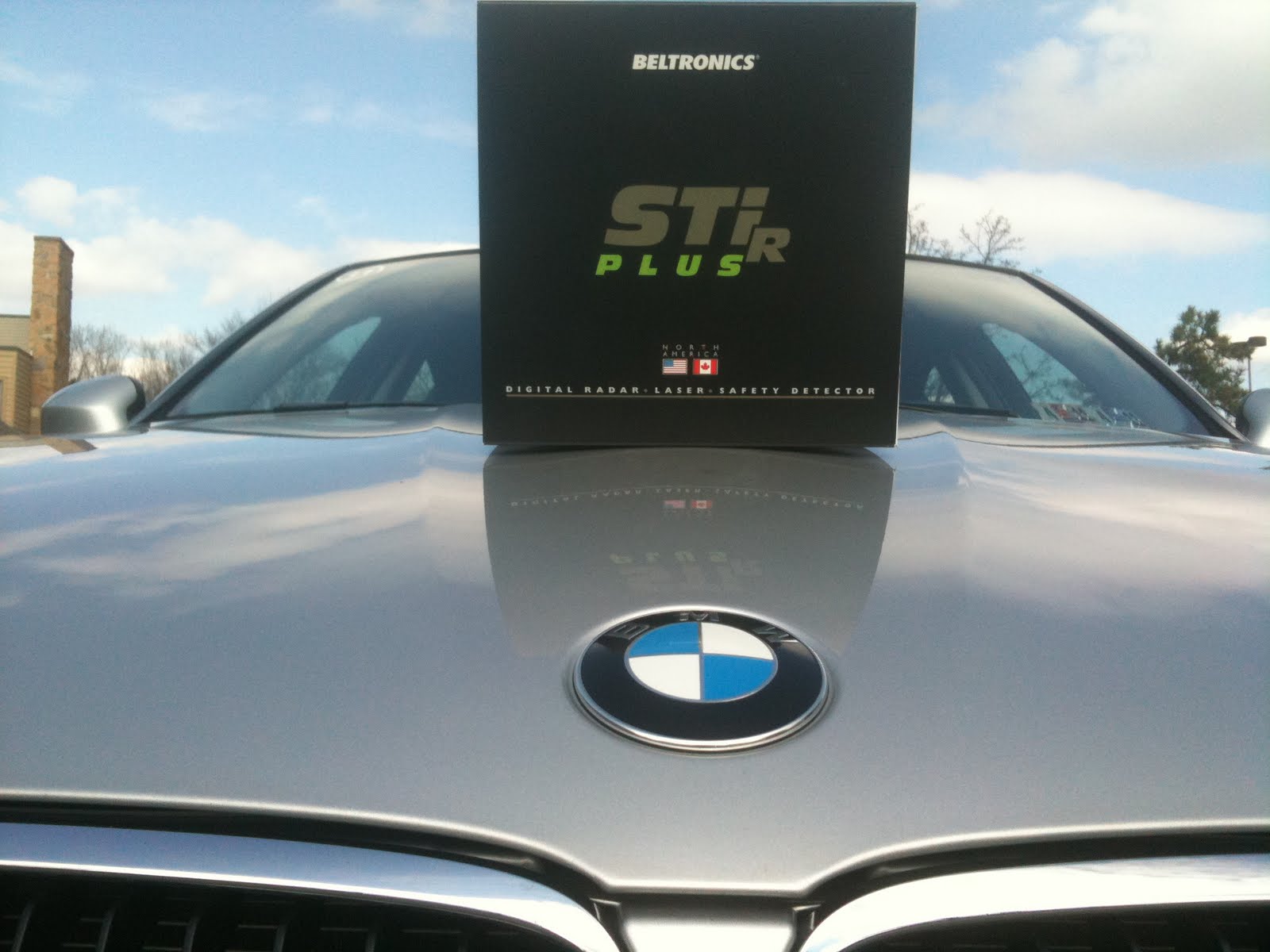


Recent Comments